Vegan Pozole Verde to Warm Your Bones

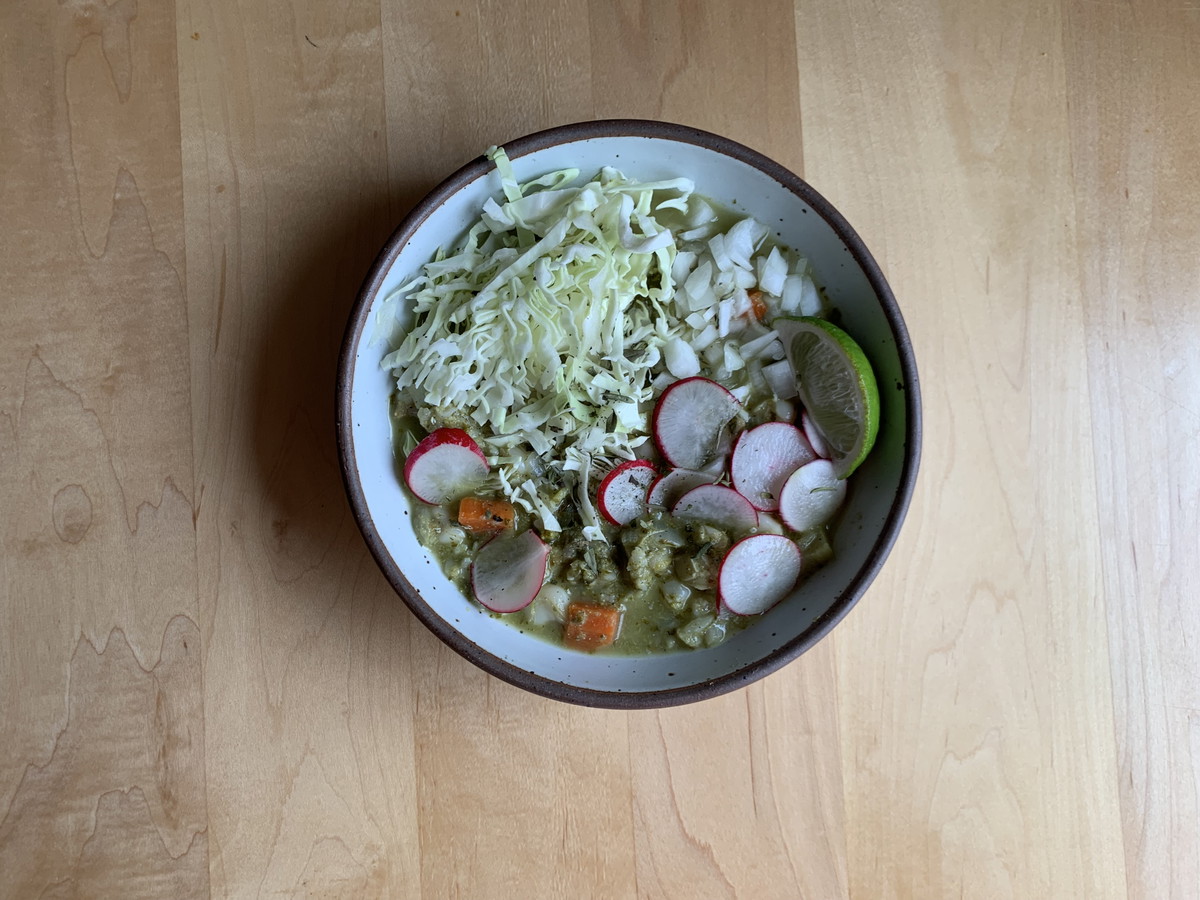
Vegetarian pozole verde recipe

Chef Efrén Hernández has become known for his global twist on modern American cuisine, first at New York City's Mimi and Babs where he received two stars and a critic's pick from Pete Wells of the New York Times, and then as Executive Chef at the revered Tavern restaurant at Rivertown Lodge in Hudson, New York. When the same hotel group opens Camptown across the river this spring, Hernández will get to dig in to his Guadalajaran roots at the onsite Casa Susanna restaurant.

His recipe for green pozole is based on one he ate a lot growing up. "It’s one of my favorite foods, because it sends me right back to Inglewood, California, sitting in my mom’s kitchen while she stands over the comal and makes tostadas for us to eat with her pozole," he says. "When I moved to Hudson and had people over for my birthday, I made a vegetarian version for the first time for some vegetarian friends, and they loved it. It’s super flavorful. With Casa Susanna at Camptown, I’m thinking about having pozole as a special pretty often and probably mixing it up a lot — red, green, veggie, pork, seafood etc. Try to have some fun with it!"

This recipe for a vegan pozole verde has deep layers of flavor from a tomatillo and chile base, nixtamalized heirloom corn (cacahuazintle is traditional, but you can use just about any varietal), and sauteed seasonal vegetables. Pozole is an excellent way to get your feet wet nixtamalizing corn, as it takes the grind out of the equation. Although we think of pozole as a cold weather stew, chef Hernández suggests swapping out the cauliflower, carrot and celery for whatever hearty vegetables are in season (mushrooms would be particularly delicious). This recipe is a multi-step project but makes a massive batch — so feel free to halve it or freeze your leftovers for later (sans toppings, of course).

Vegetarian Pozole Verde

Vegetarian Pozole Verde

Efrén Hernández

Servings

20+

Ingredients

    blank

    • 2.2 lb bag of heirloom corn such as cacahuazintle

    • .32 oz cal

    blank

    • 1 tsp cumin

    • 2 tsp coriander

    • 2 tsp pink peppercorn 

    • 10 tomatillos, peeled

    • 4 poblano peppers

    • 3 garlic cloves

    • 1 cup pumpkin seeds

    • 3 tbsp sesame seed 

    • 1 pickled serrano pepper or raw jalapeño

    • 4 cups cilantro, including stems

    • Salt and lime juice to taste

    blank

    • Neutral cooking oil such as grapeseed

    • 2 Spanish onions, medium diced

    • 3 carrots, medium diced

    • ½ stalk of celery, medium diced

    • 3 heads of cauliflower or broccoli, cut into medium size florets 

    • Sliced radish, white onion, thinly shaved green cabbage, dried oregano or fresh cilantro, wedges of lime and tostadas to garnish

    Directions

      blank

      1. Rinse the corn in a colander to remove any debris or chaff.

      2. Pour the corn into a large nonreactive pot and add the cal directly into the pot. (You can also pre-mix a slurry of cal and water and add to the water to ensure even distribution.) Add just enough water to cover the corn by 4 inches [10 cm] and stir everything together with a spatula to evenly incorporate.

      3. Cover the pot (optional; however, it helps to get to temperature faster) and place over high heat. Bring to a boil, then lower the heat to medium for a simmer. Using a fine-mesh sieve, skim any unwanted kernels or particles that float to the surface and discard.

      4. Cook the corn for about 20 to 30 minutes, depending on the varietal stirring every 5 minutes or so to keep the corn from sticking and to keep the cal well distributed. Check a kernel for done-ness using the following method:
        -Remove a kernel and rub it between your fingers. You want the skin to easily slide off.
        -Taste a kernel. When it’s ready, it will be tender, but still quite al dente (like a boiled peanut or roasted cashew) with a firm chalky center.

      5. Continue cooking if necessary, checking every 5 minutes, until the skins are loosened and you have reached the desired texture and flavor. Remove from the heat and cover the pot. Let the pot sit undisturbed for 6 to 12 hours.

      6. Drain the steeped corn, now called nixtamal, into a colander. Rinse, massage, and agitate the nixtamal vigorously until no skins remain.

      7. Fill a separate pot with enough water to cover the nixtamal with about 2 in [5 cm] of water. Bring to a boil over high heat, then lower to a simmer (medium-high heat). Add the rinsed nixtamal and cook until it softens to your desired texture (between 2 and 6 hours).

      blank

      1. Toast all spices and grind them to a fine powder using a spice grinder or Molcajete.

      2. The tomatillo and poblano and garlic can either be boiled OR charred on a Comal (my preference). You’ll then need to peel the peppers, but leave the charred skin on the tomatillos and garlic. 

      3. Place all of the ingredients into a blender and pulse until it looks and has the consistency of a thick salsa. Use water if it needs to be thinned out but don’t thin it out too much as it should be a thicker consistency. 

      4. Season with salt and lime to your taste. Add more serrano if you want it spicier. 

      blank

      1. Next, sauté the vegetables in some type of fat. I use grapeseed oil but you can use any neutral fat.

      2. Once the vegetables start to soften (but aren’t fully soft!) add the nixtamalized corn with all of the cooking liquid. I like my vegetables to still have a bite to them, so I don’t let them cook too far or else they’ll be mushy. 

      3. If the pot needs more liquid, add just enough for all of the ingredients to be submerged in liquid. Don’t overdo it or the pozole will be too soupy and loose. 

      4. Let this simmer for 15-20 minutes. 

      5. Add your green base to the pozole and let it simmer for 5-20 minutes depending on how much more you want to cook the vegetables and if you want to reduce the pozole more or less. 

      6. Season with salt and lime to your taste. 

      7. It’s perfectly good to serve it the day of, but I like to let it sit for a night before eating it to allow the flavors to develop.

      8. Make sure you have your tostadas, sliced cabbage, radishes, diced onion, cilantro and lime ready to go, and let people garnish their own!

      4 comments

      MASIENDA |

      Hi Cindy! This recipe has dried Mexican oregano as an optional garnish, but fresh cilantro is also a common choice, especially in green pozole. It really depends on the region—some folks prefer oregano, while others go for cilantro. Either way, both are delicious!

      MASIENDA |

      Hi KT! Cal is a key ingredient in nixtamalization, an ancient Aztec technique where dried corn is cooked with cal (lime) in water. This process helps soften the corn, making it easier to grind into masa. It also enhances the flavor, texture, and aroma of the corn, unlocking all the delicious potential in your tortillas, tamales, and other masa-based dishes. Through nixtamalization, the corn releases nutrients and has a richer, more complex flavor—essential for making great masa! Let us know if you have any additional questions.

      CINDY |

      I am surprised you don’t serve this with dried Mexican oregano- is that regional? I’ve always served either oregano, not cilantro!
      Just curious!

      KT |

      What the heck is cal??

      Leave a comment

      Please note, comments need to be approved before they are published.