



How to Get Your Tortillas to Puff Every Time
How to Get Your Tortillas to Puff Every Time

August 9, 2023
People are always asking us about how to achieve the tortilla puff (also known as the pancita) with our bestselling masa harina, which is the result of trapped moisture at the tortilla’s core expanding outward in the form of steam.
In the literal sense, the puff is to tortilla making what the crumb is to bread baking. That’s to say, it’s a sign that your tortilla is superbly executed. Though a marvel to behold, the puff about far more than just aesthetics. The puff helps to ensure that the tortilla cooks evenly through the center while also maintaining proper moisture and elasticity. It’s one part technique, one part practice, and one part magic.
But we’ll try to break it down in the tips below.
Note: If you're just getting started, or really struggling to achieve the puff, check out Masa Taquera, our puffiest masa yet.

1. It’s all about moisture.
Your masa should be moist but shouldn’t stick to your hands; think fresh Play-Doh.
So you'll want to mix your masa well. Aim for a dough that’s well-kneaded — three minutes or so will do. This helps ensure even absorption.
Let it rest. Allowing your masa to sit for 10-20 minutes will also give you a boost in terms of hydration. Just be sure to cover it so that it doesn’t dry out.
Try the Smush Test. If you think your masa is still thirsty, try rolling a small ball and smushing down with a finger. If the edges crack, it needs more water. If the edges are smooth, press and cook away.
And if you’re working with lots of masa, we recommend having a spray bottle on hand. Give your tortilla a spritz once it’s on the comal/griddle for an extra kiss of hydration.
2. Compression, compression, compression.
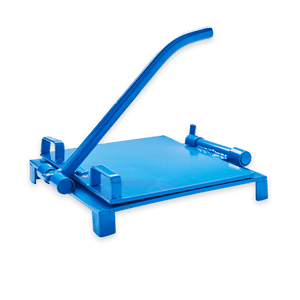
For a symmetrical puff, we recommend pressing once, then rotating 180 degrees (or flipping over) for a second press, to help ensure that one side doesn’t inflate while the other droops. You can use any tortilla press or even a pair of books, but an especially sturdy, square press gives you the best shot at evenness.
You don’t want a tortilla that’s too thick — the steam won’t rise under the weight of too much masa! A very thin tortilla will also be susceptible to tearing, which will sabotage your chance at a puff. So aim for that sweet spot in the middle.
Getting a partial puff? Grab a damp paper towel or dishcloth and gently press around the perimeter. This will push some of the steam to the middle, increasing your puff probability.
3. Hot hot heat.
Your comal needs to be pre-heated, and hot. We recommend medium high to high on most stoves to get to between 400 and 500 degrees Fahrenheit. (The wood-fired clay comales found throughout Oaxaca average about 650 F, for example.) We’re searing both sides of a tortilla fast enough to trap the moisture in the center.
If you aren’t using a non-stick pan or a well-seasoned comal/griddle, your masa will adhere to your surface rather than releasing and elegantly expanding upwards and outwards.
Don’t forget, flip twice! After you place your tortilla on the comal, you’ll flip it to the reverse side, then flip it back to the original side, and that’s when puff happens! When you tear open your newly puffed tortilla, you should see the top layer of masa separate from the bottom. Think pita bread.
One final piece of advice? Say a prayer. Not religious? Send good juju, then. Or do a dance, sing a song, wish upon a faraway star. There’s a little bit of mystery and magic in the puff process, so leave room for it!
PS: While achieving a puff is a good indicator that your tortilla is properly cooked, a puff-less tortilla can be just as scrumptious.
For more tortilla tips, check out our full playlist on YouTube.


All Comments
Hi Ging! Thanks so much for your comment. We’ll be sending you an email shortly.
We live at 10,000 feet, and have done everything to ensure a puffed tortilla; But it has never happened. Even after years of trying, and doing exactly what you recommend above. What would you suggest for making tortillas puff at our altitude with the low partial pressure? Thanks!
Hi Kim! Here’s the perfect blog for you: https://masienda.com/blogs/learn/anatomy-tortilla-puff
I’m seeing a lot of talk about the puff, but no explanation of why you want the puff. This would be good information at the top of this page. Thanks!
Hi Judilee! Thanks so much for sharing this — we genuinely love hearing how folks are experimenting at home and paying attention to flavor and texture like this.
It’s not something we’ve extensively tested on our end, but we’re always curious about these kinds of observations. Please keep us posted if you continue experimenting. We’d love to learn from what you discover.