Make Masa Ball Soup

Chochoyotes and Beans

This hearty, plant-powered soup is comprised of little more than two ingredients, crops that make up the backbone of the indigenous Mexican diet: corn and beans.

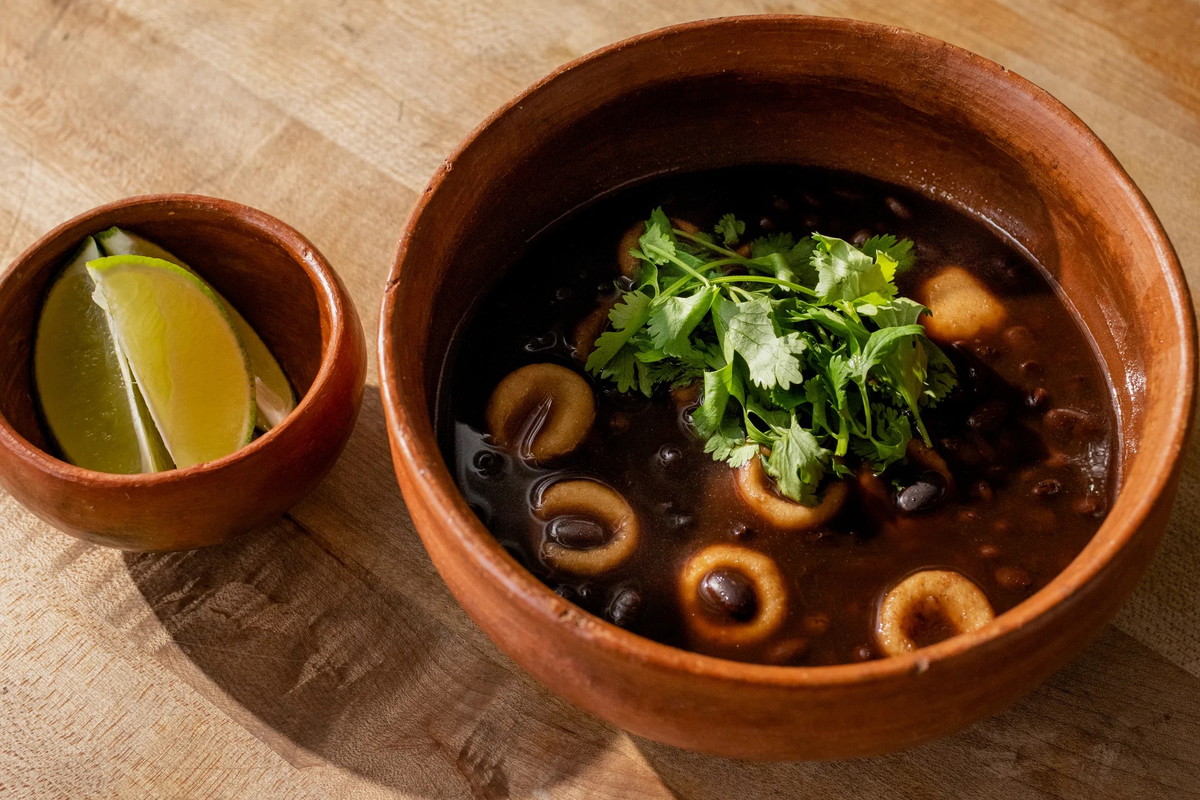
For the corn component, we’re making chochoyotes, little masa dumplings made with masa harina. These dumplings are also known as ombligitos (“little belly buttons”) in their origin state of Veracruz, Mexico. Often boiled and even sometimes fried, they are usually added to soups, stews, and pots of beans. The chochoyotes are cooked in a flavorful, brothy pot of black beans which have been prepared with aromatics (onion, garlic, and avocado leaves for their herbal, anise-y flavor) sauteed in olive oil or lard. A little more olive oil to finish, and this hearty dish is a vegetarian main greater than the sum of its parts.

NB: Traditional chochoyotes fold a bit of fat and salt into the masa, but this is totally up to you. If using fat like olive oil or manteca (lard), we recommend beginning with 10 percent fat weight of total masa weight (1:10 ratio). If you plan to shape and then immediately freeze them, a bit of fat mixed into the masa will help preserve the integrity of the chochoyotes through the eventual thaw. We enjoy them both with and without the additional fat, and season them instead within the cooking liquid.

Chochoyotes recipe adapted and reprinted from MASA by Jorge Gaviria with permission from Chronicle Books, 2022. Photographs © Graydon Herriott.

Chochoyotes (Masa Dumplings) and Beans

Chochoyotes (Masa Dumplings) and Beans

Masienda Team

Servings

6

Ingredients

  • Olive oil
  • 2 small or 1 large onion, quartered (you can leave the peel on if you’d like)
  • 1 or 2 heads garlic, halved crosswise (peel on)
  • 1 or 3 avocado leaves (optional)
  • 1 pound (about 2 cups) dried beans, rinsed and soaked if time permits
  • Kosher salt
  • 1 packed cup masa harina
  • 1 scant cup warm water

Directions

    For the beans

    1. Heat olive oil over medium heat in a large pot. Add onions, garlic and avocado leaves if using. Cook, stirring once or twice, until onions and garlic are nicely browned and leaves are toasted on both sides.

    2. Add beans and about 6 cups water (enough to cover by a couple inches). Bring to a boil and leave them there, boiling hard, for about ten minutes. Then reduce to a low simmer and cover partially with a lid. The cooking liquid will reduce and become richly flavorful over time. If the water starts to get low, add additional water (preferably hot, from a kettle). The beans should always be covered by a couple inches of water, so they cook evenly and so there’s room to cook the chochoyotes.

    3. After two hours or so, begin testing the beans by pressing one between your thumb and forefinger. They should give easily, and may take up to two more hours to achieve the desired consistency – it’s up to you whether you like them to retain some shape and bite or to be fall-apart tender. At this point, you can add salt (not too heavily, as it takes some time for the beans to absorb it).

    For the chochoyotes

    1. Slowly add the water to the dry masa flour in a large bowl, stirring the masa to incorporate evenly by hand. Knead until the water is evenly incorporated and no dry, powdery spots remain (3 minutes should do). The masa should feel a little like play dough; hydrated but not sticky. If it’s feeling dry, add more water as needed.

    2. Roll a ball of masa slightly smaller than ping-pong-size. Press your fingertip into the center, creating an indentation about a third to halfway into the ball. Place on a baking sheet and cover with a damp kitchen towel.

    3. Drop your prepared chochoyotes into the beans and their broth, and simmer until they rise to the surface.

    4. Discard the avocado leaf from the beans and taste for salt. Serve in bowls, garnishing with a drizzle of olive oil.

    1 comment

    VARIAN |

    Delicious. I am happy to have a new favorite for a thermos lunch.

    Leave a comment

    Please note, comments need to be approved before they are published.