
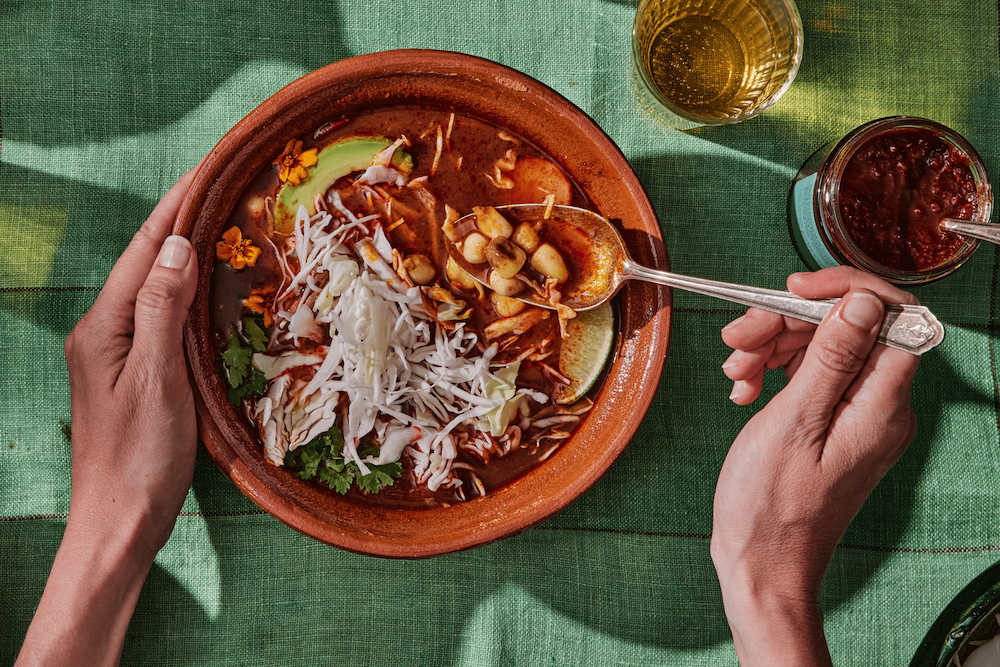
Temps are starting to drop, which means we’re shifting into soup mode — pozole mode, specifically. This comforting and hearty stew may typically be served on special occasions like Christmas and New Years, but we think you can make a batch any time of year and eat it throughout the week or set out a pot surrounded by all the toppings and watch your friends flock to the table.
BTW, pozole is also an excellent way to get your feet wet nixtamalizing corn, which, while complicated-sounding, is really just like boiling pasta. (You will need some cal though.) Many people love making pozole with canned hominy, but with some extra time, we swear by the difference in flavor and texture that nixtamalized heirloom corn adds. Cacahuazintle is traditional here, but we also like White Olotillo for pozole.
This recipe makes fresh nixtamal or maíz pozolero, combining the cook time of the nixtamal with that of the pork shoulder. While the corn here should be chewy yet have bloomed (where the end of the corn pops open in full hominy fashion), the corn can be cooked separately, and added to the pork and broth afterwards if you desire a softer kernel or you’re still getting comfortable with nixtamal. Many folks believe that corn fully blooms when the tip cap (the little tip that connects each kernel to the cob) is removed. While this speeds up the process, we believe it’s not necessary for decadent pozole. We say save yourself the hour (!) of manual removals and enjoy the corn in its full entirety. If you make your stock and adobo or chile puree ahead of time, pozole doesn't have to be a big undertaking, and its leftovers can nourish you and yours for days on end.
Our Best Recipe for Pozole Rojo

November 29, 2023



7 comments
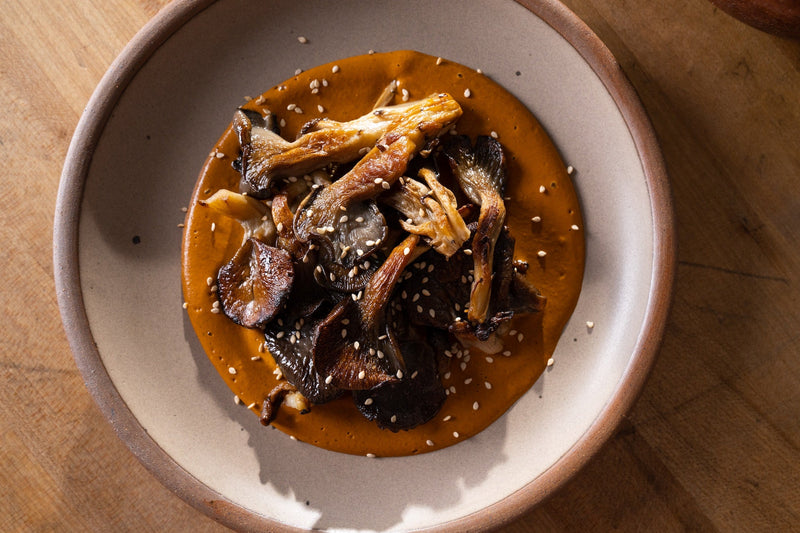
Hi Maida - great question! For vegetarian or pescatarian swaps in pozole rojo, you can take a similar approach to our vegan pozole verde. We recommend using hearty vegetables like cauliflower, carrot, and celery, adjusting based on what’s in season-mushrooms would be especially delicious. For pescatarians, you can also add shrimp or a firm white fish toward the end of cooking.
You can check out our vegan pozole verde for guidance on veggie ratios and cooking time, then apply that same method to the red base. https://masienda.com/blogs/learn/vegetarian-pozole-verde
This recipe is almost identical to my mom’s. She would break down the chiles in the molcajete to extract the oils from the chiles and into the mix. She added pork neck and tail bones in the broth for additional flavor and richness.
My mother was an amazing cook, almost everything was made from scratch. She made half whole wheat/half AP flour tortillas every other day. Whenever mom made pozole or menudo she’d make the tortillas extra thick.
Mom used to love to sing her favorite Mexican songs while she cooked.
My father grew heirloom chiles and tomatoes in the garden every summer. He would harvest the excess chiles and dehydrate them for use in the winter months.
There was always chile de molcajete, frijoles de la olla and other homemade delicacies in the fridge. Mom was known in our church community for serving amazing dinners and Sunday brunches. People would gather outside on the church steps hoping to be invited.
Anyway, I know I got a bit off track the subject of pozole but I just wanted to share my memories of the kitchen I grew up in that was filled with love, laughter, song and amazing food.
Con cariño y amor!
Do you have a recommendation for replacement of the pork for vegetarians or pescatarians?
Thanks!
Hi Gary, sorry for the confusion! We’ve updated the recipe—there are 5 cloves of garlic (3 minced and 2 whole). The minced garlic goes in with the pork and nixtamal, and the whole garlic is toasted with the chiles for the adobo. Thanks for catching that!
Hi Joe! The minced garlic goes into the pot with the pork and nixtamal, while the 2 whole cloves are toasted with the chiles and onion for the adobo. Thanks for pointing that out—we’ve updated the recipe accordingly!
Quick question about the garlic. Ingredients lists 5 garlic cloves chopped. Instructions have you add the minced garlic to the recipe, but then in another spot tells me to toast the whole garlic with the chiles. Could you clarify please? Thanks so much! Looking forward to this one!
Errata. There is no “minced garlic” in the list of ingredients, but there are 5 cloves of chopped garlic. These presumably would be added to the pot w the pork and nixtamal.
But then there are no whole garlic in the list with which to make the adobo.