From Guadalajara with Love: Carne en su Jugo

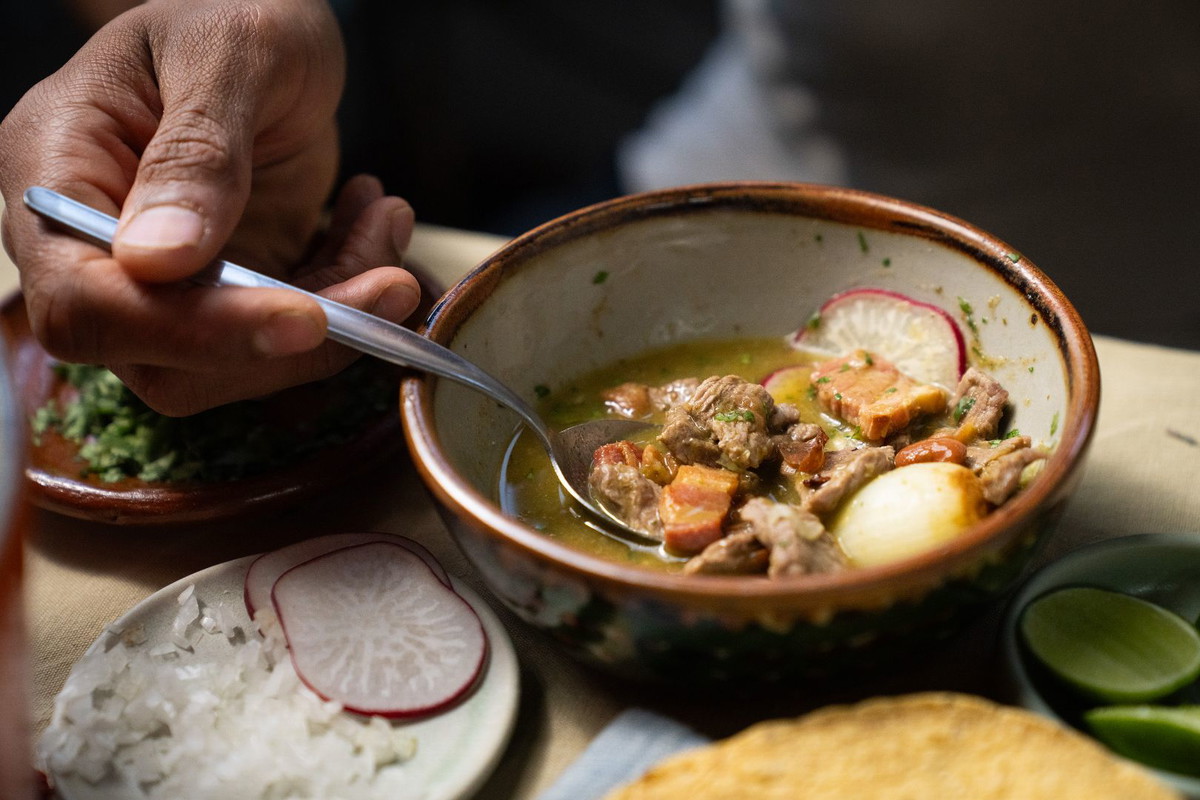
Bowl of carne en su jugo, garnished with radishes, cilantro and paired with freshly made tortillas

By Miguel Guerrero

Carne en su jugo, translating to "meat in its own juices," embodies true comfort in a bowl. Originating from Jalisco (specifically, the city of Guadalajara), this beloved dish holds a special place in my heart. It was the very first dish I tasted during my first visit to my family in Guadalajara, and with each spoonful, I find myself transported back to those cherished moments with my mama and abue. This Mexican beef stew bursts with flavor from its base of bright salsa made with tomatillos, onions, garlic, cilantro, and serrano peppers. Add steak, beans, bacon, and spring onions, and you've got a hearty dish that's perfect year-round. And no serving of carne en su jugo is complete without warm tortillas to soak up every last drop of flavor.

If you ever find yourself in Guadalajara, be sure to visit Karne Garibaldi who are famously known for their carne en su jugo. 
Carne en su Jugo

Carne en su Jugo

Miguel Guerrero

Category

Ingredients

    blank

    • 2 lbs of thinly sliced top round steak, cut into 1 inch pieces

    • 1 lb bacon, each strip cut into half-inch pieces

    • 4 cups of cooked and drained bayo or pinto beans

    • 10 large spring onions, bulbs only

    • 1 tsp salt

    • ½ tsp black pepper

    • 4 cups beef stock

    • 2 cups of water

    blank

    • 10 tomatillos

    • 2 serrano peppers

    • 2 garlic cloves

    • 1 bunch cilantro

    • 1 cup of water

    • 1 tbsp chicken bouillon

    • ½ tsp of cumin

    • 1 tsp oregano

    blank

    • Limes

    • Onion, diced

    • Cilantro, chopped

    • Radishes, chopped

    • Fresh tortillas

    Directions

    1. Begin by filling a medium-sized saucepan with water, enough to cover the tomatillos and serrano peppers. Bring the water to a boil. Meanwhile, remove the husks from the tomatillos and wash them thoroughly. Once the water is boiling, add the tomatillos and serrano peppers to the saucepan. Boil about 10 minutes until their color slightly changes. Once done, remove the saucepan from the heat and set aside to cool.

    2. While the tomatillos and peppers are cooling, take a large skillet and fry the bacon over medium-high heat until evenly browned. Once done, transfer the cooked bacon to a plate lined with paper towels to absorb excess grease. In the same skillet with the remaining bacon fat, add the spring onion bulbs. Sauté for approximately 7-10 minutes, or until they’re softened. Once softened, remove the onions from the skillet and set them aside with the bacon.

    3. In a blender, combine the cooked tomatillos and serrano peppers with cilantro, 2 garlic cloves, 1 cup of water, chicken bouillon, cumin, and oregano. Blend the ingredients until smooth, then set aside.

    4. Season cubed steak with salt and pepper and set it in a large pot over medium-high heat. Once the steak begins to brown and release its juices, reduce the heat to medium and add the cooked bacon, spring onions, and drained beans.

    5. Next, add the prepared salsa, along with 4 cups of beef stock and 2 cups of water, into the pot. Stir everything together until well combined. Cover the pot with a lid and let the mixture cook for about 15-20 minutes.

    6. Once the flavors have melded together, ladle the stew into bowls. Garnish each serving with onion, cilantro, radishes, and a squeeze of lime. Serve alongside warm tortillas.

    3 comments

    MEGAN HERNANDEZ |

    I love that I just found this recipe here, and I love the title! I recently went to Guadalajara for the first time and got to try Carne en su Jugo while I was there. I can’t wait to make it at home now!

    MASIENDA |

    Hi Helen! Sorry about the link being in Spanish. Please switch the country from Mexico to USA in the top right corner, and the page will change back to English. Thanks!

    HELEN ZUNIGA |

    Can you please send me this recipe in English? Carne en su jugo

    Leave a comment

    Please note, comments need to be approved before they are published.